Before the Myth: Firefall, Boulder, and the Lost Chapter of the Colorado Sound
How a brief moment in 1970s Boulder mirrored Laurel Canyon and helped shape the Colorado Sound
Sometimes, as a music writer, I get the rare chance to speak with artists who were part of the soundtrack of my life long before I ever picked up a notebook.
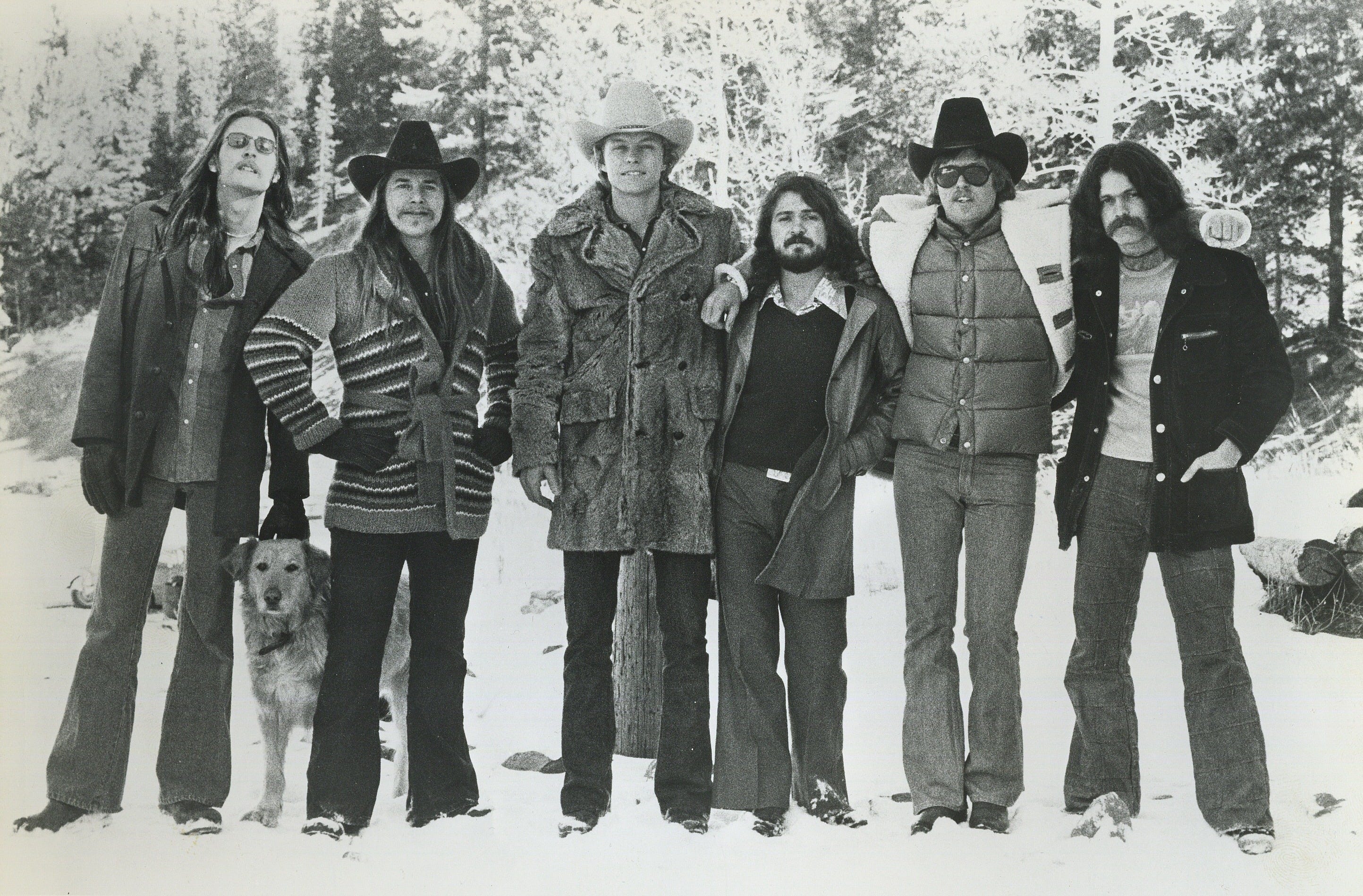
I was born the year Firefall formed, and I wouldn’t move to Colorado for another decade. But some of my earliest memories are of riding through the wooded backroads of northern New Jersey with my mother after her long workdays, listening to that soft, drifting mix of flute and guitar coming through the factory speakers of our Ford Pinto.
Those gentle, searching notes helped shape my early love of flute in rock and tuned my ear toward the harmony-rich country-rock that drifted across late-’70s radio, alongside bands like The Eagles. Long before I understood where the music came from, it had already settled somewhere deep in my imagination.
Only later did I realize how much of that sound traced back to Colorado. For a brief moment in the early 1970s, Boulder felt like Colorado’s answer to Laurel Canyon. Not in geography or mythology, but in function. Musicians came for the same reasons: distance from industry pressure, room to experiment, and a tight creative community where ideas moved easily from living rooms to rehearsal spaces to studios. Where Laurel Canyon helped define the late-’60s folk-rock explosion, Boulder became a quieter second act, drawing players connected to The Byrds, Buffalo Springfield and the expanding country-rock world into the shadow of the Rockies.
That’s where I met guitarist and bandleader Jock Bartley on a recent morning call, reflecting on a time when Boulder was, in his words, “one of the most happening places in America.”
For Bartley, Firefall grew naturally out of a tight-knit musical migration that saw major artists relocating to Colorado in the early 1970s. Rick Roberts arrived with deep country-rock credentials from The Flying Burrito Brothers, a band born directly out of The Byrds orbit. By the time Firefall formed, Boulder was filling up with musicians tied to that same extended musical family tree.
“When Rick Roberts and Chris Hillman and Michael Clarke and Richie Furay all moved to the mountains above Boulder,” he recalled, “it was an amazing time.”
Roberts began jamming with Bartley, and the sessions quickly turned serious. Soon bassist Mark Andes and singer-songwriter Larry Burnett joined, bringing songs with them.
“We had twenty-five original songs the first week,” Bartley said.
It was an organic beginning shaped less by ambition than by proximity, talent, and timing. Boulder in those years also revolved around Caribou Ranch Recording Studio, where artists like Chicago recorded in seclusion high above town.
In Colorado music circles, stories from that era still drift through conversation like campfire smoke. Among them are long-told accounts of Bob Dylan passing through Estes Park while recording at Caribou and, according to local lore, staying at The Stanley Hotel. Whether every detail holds up or not, almost feels beside the point. What matters is how vividly those stories capture a time when the mountains were quietly full of musicians.
Looking back, Bartley sees Firefall as part of a broader movement shaped by groups like Crosby, Stills & Nash and Buffalo Springfield—and perhaps one of the last bands to emerge from that lineage with major commercial success.
Firefall’s sound wasn’t planned so much as discovered in motion.
“We didn’t try to sound like anything,” Bartley said. “In the studio, you just play the best thing you can for the song.”
Much of that sonic identity came from Roberts and Burnett’s songwriting, combined with Bartley and Andes’ arrangement instincts. The goal wasn’t flash. It was atmosphere and storytelling.
“Music transports people,” Bartley said. “Sometimes it’s visual. Sometimes it’s just a sound that takes you somewhere.”
Firefall wasn’t so much democratic as combustible. Bartley remembers strong personalities pushing against one another creatively while still finding common ground in the music. The band, he said, “burned brightly for four or five years,” a burst of momentum that helped produce some of the most recognizable radio staples of the era.
The band’s breakthrough came almost by accident.
Their biggest single, “You Are the Woman”, arrived late in the recording process. “Rick came in and said, ‘I wrote this last night,’” Bartley recalled. “We worked it out and recorded it fast.”
Though it became the band’s defining hit, Bartley still remembers it feeling slightly apart from the rest of the record.
Their FM-radio run continued with songs like “Just Remember I Love You” and “Strange Way”, cementing their place in the late-1970s soft-rock and country-rock landscape.
One of Bartley’s most vivid memories comes from recording the guitar solo for “Mexico” at a Miami studio.
After nailing the solo in one take, he walked into the control room and froze.
“The first person I see is Eric Clapton watching me play,” he said. “After that, I couldn’t play anything.”
It’s the kind of story that captures both the surreal speed of Firefall’s rise and the strange intimacy of that era’s recording world.
Firefall recorded for Atlantic Records, and Bartley remembers the label’s expectations as simple.
“Once you have success,” he said, “they just want more of that.”
Still, he said, the band resisted outside interference. During sessions for their third album, a visiting executive was quickly shown the door.
“We told our manager, ‘Get him out of here. We’re creating.’”
Lineup changes eventually reshaped Firefall, and Roberts departed as the band’s commercial peak faded. But Bartley remained and ultimately continued under the Firefall name.
“I realized I owned the name,” he said. “And I thought, these songs are great. Let’s keep doing this.”
Today, Firefall remains active, touring regularly and recording new material. The band returns to Colorado on April 3rd for a show at the Paramount Theatre, bringing its catalog back to the state where it first took shape. Inducted into the Colorado Music Hall of Fame in 2015, the group has remained a steady presence on the road.
At their peak, Firefall toured internationally alongside acts like Fleetwood Mac, The Doobie Brothers, and Lynyrd Skynyrd.
What keeps him going, he said, is simple: the audience.
“When people come up after the show and tell us they grew up with our music,” Bartley said, “that’s incredibly fulfilling.”
Tickets for the show are available here.
~ JVT


